Client
Fortescue Metals Group
Location
Pilbara, Western Australia
Industry
Mining
Fortescue Metals Group
Pilbara, Western Australia
Mining
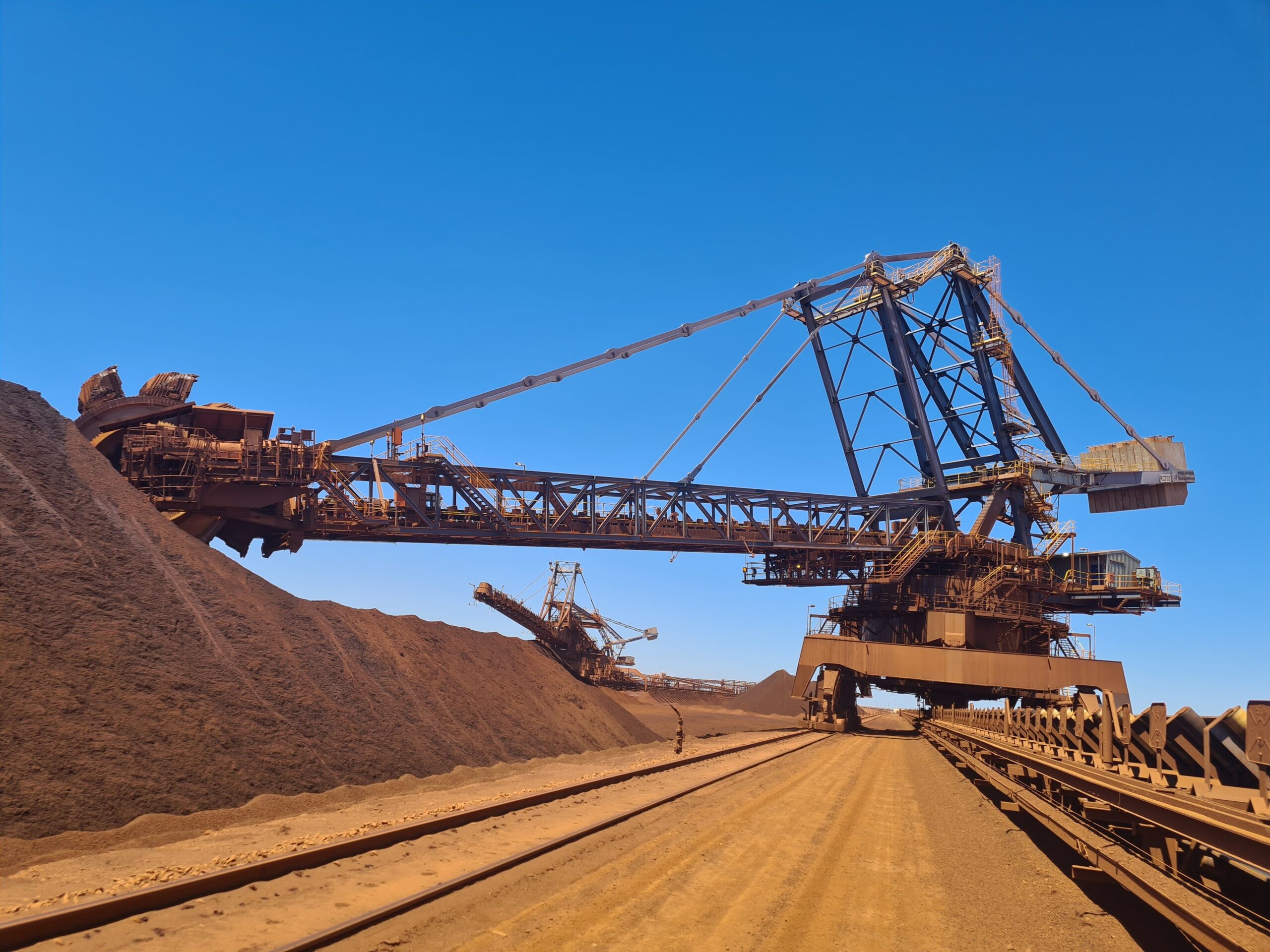
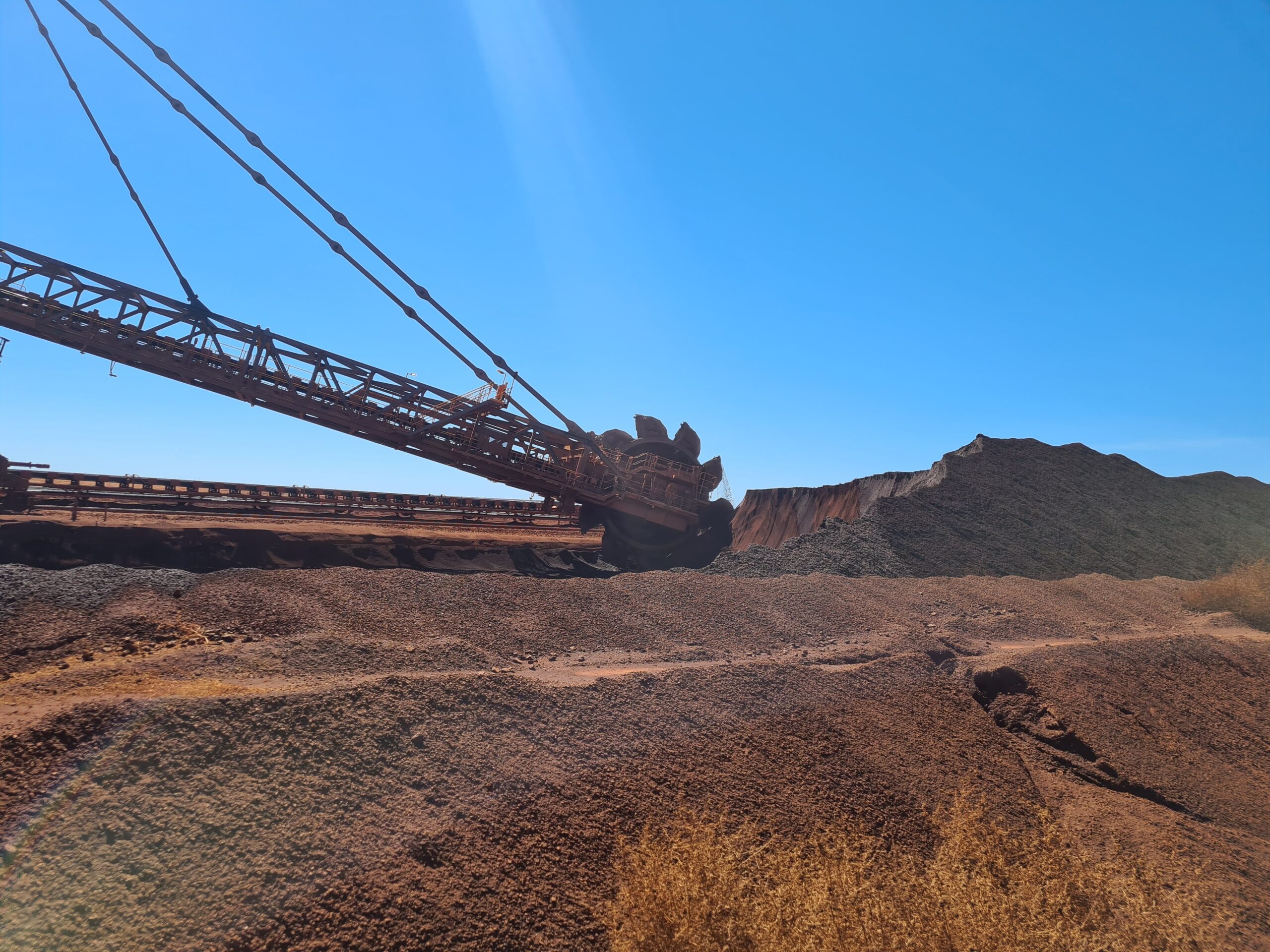
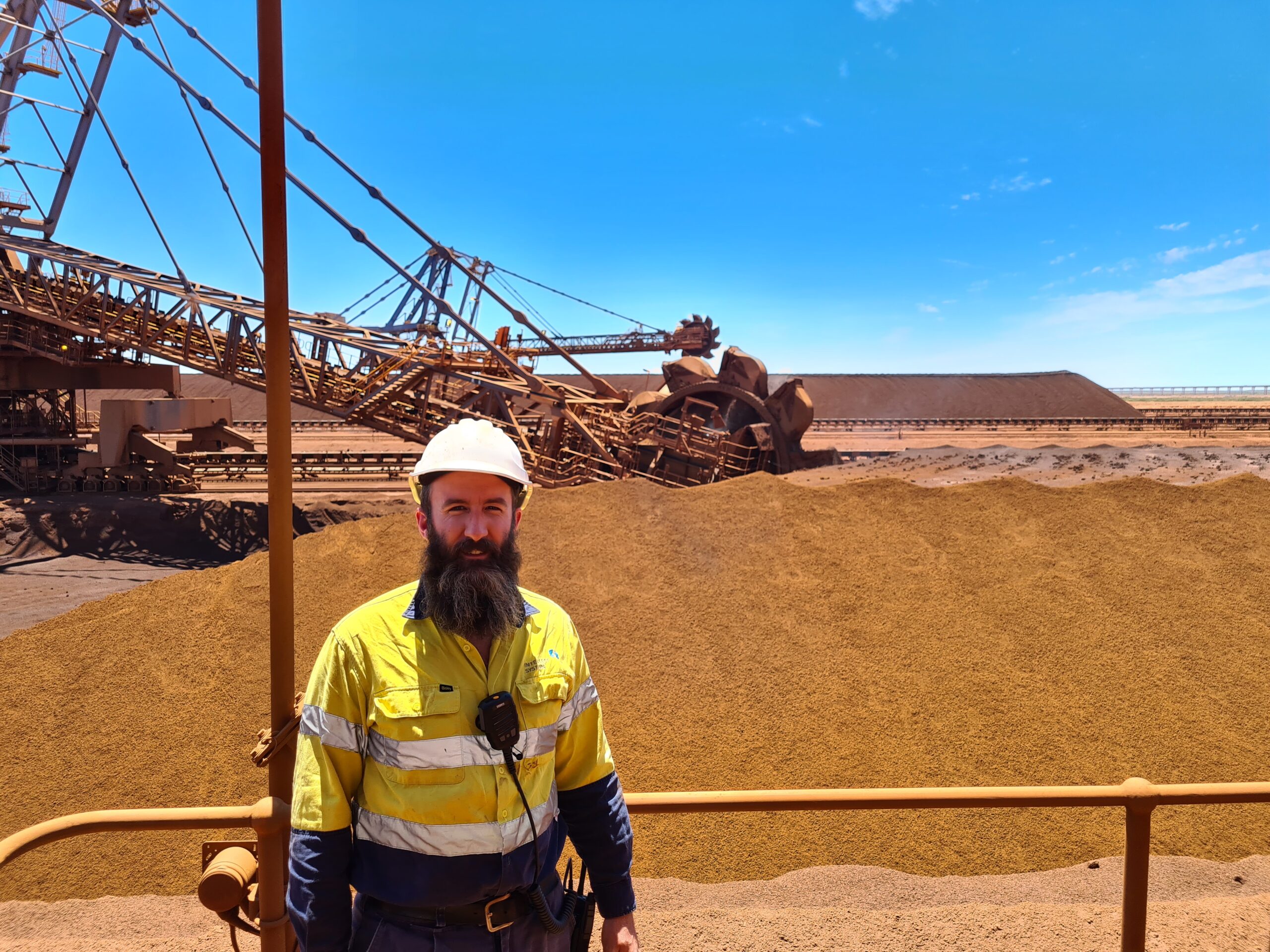
FMG’s Anderson Point project is a significant iron ore loading facility near Port Hedland in Western Australia. The project has been in operation since 2008 and has undergone several upgrades and expansions to increase its capacity and efficiency. Anderson Point’s current capacity is around 190 million tonnes per annum (Mtpa), with plans to expand this to 210 Mtpa.
FMG has engaged Intellect Systems to optimise a reclaimer at Anderson Point through a series of control system changes related to the material digging sequence. The aim of the control system modifications is to increase reclaimer setpoint conformance and net rate as well as reduce overload trip events.
The Intellect Systems team have extensive knowledge of the FMG standards and systems, and a proven track record in delivering similar projects.
This is the second reclaimer that Intellect Systems were called upon to optimise for FMG at this site. Two years later, the first reclaimer is still operating optimally with no degradation.
With Intellect’s industry and process experience we understand the typical constraints in most systems where potential can be unlocked. Using simple and effective software changes, existing infrastructure can often reap significant productivity and efficiency gains.
After evaluating the reclaimer through a data audit and on-site inspection, it was apparent the machine’s generational updates and various patches implemented over time were impacting its performance.
The Process Optimisation team at Intellect undertook a holistic recommissioning of the reclaimer’s sequence and control, starting with setting up a development environment where a simulation code replicates data supplied from critical field devices.
Intellect then developed a simulated environment sufficient to perform a full Factory Acceptance Test (FAT) of the digging sequence.
The new fit for purpose logic was then deployed in parallel with the existing logic. After a commissioning and monitoring period, the legacy logic was removed, giving the machine a clean, efficient base and ensuring it was simple and easy for operators to work with.
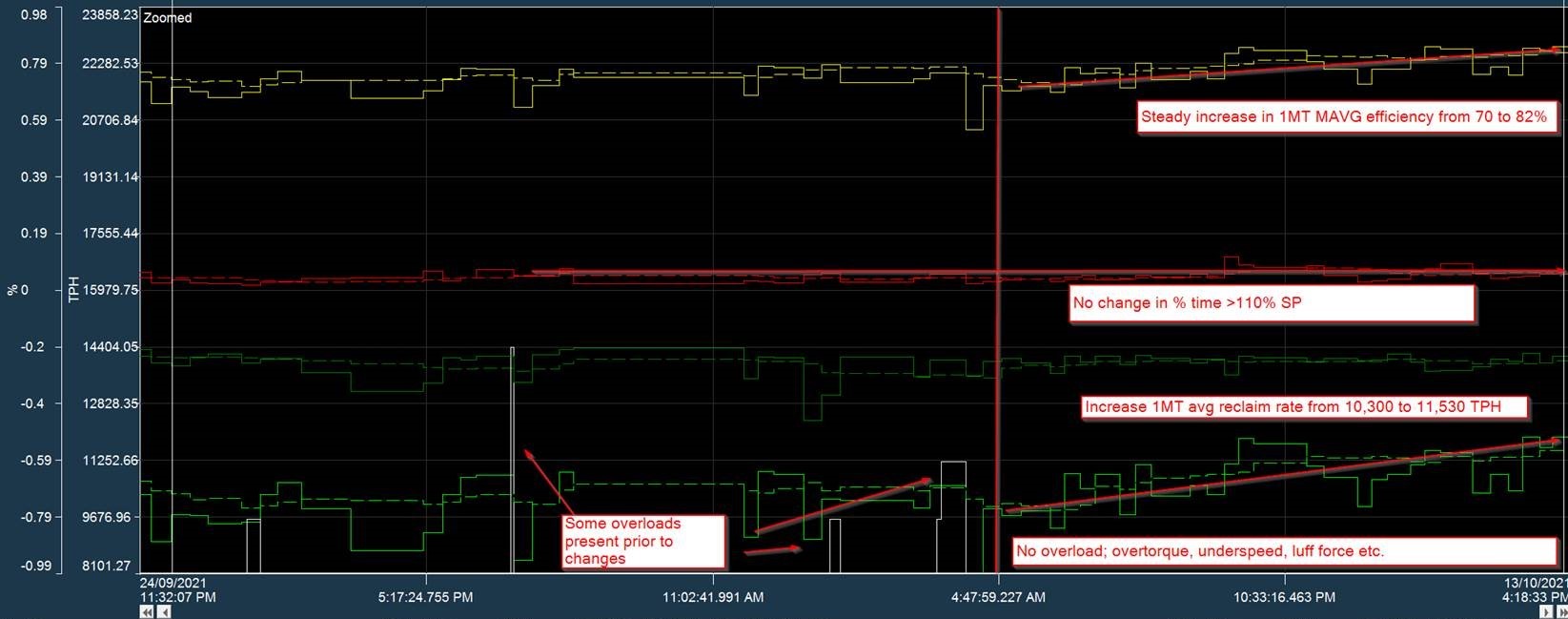
Across all fines products, when comparing full builds, the net rate improved by an average of 657 tonnes per hour (TPH). While the net rate has been improved, bucketwheel peak torque and instances of overload have been reduced.
A secondary benefit was a more consistent net rate across different products, benches and stockpile sizes enabling more accurate forecasting and scheduling of berth use and machine movements.
The average reclaim rate averaged across a 1MT batch has increased from 10,300 to 11,530 TPH or +1,230 TPH/12%. This is without increasing peak load and while reducing overload count.
© 2026 Intellect Systems. All Rights Reserved. | Website by Axiom.